CASE STUDY 8
Public Employment: IDC Partnership: Public Employment as Urban Stabilisation Supporter
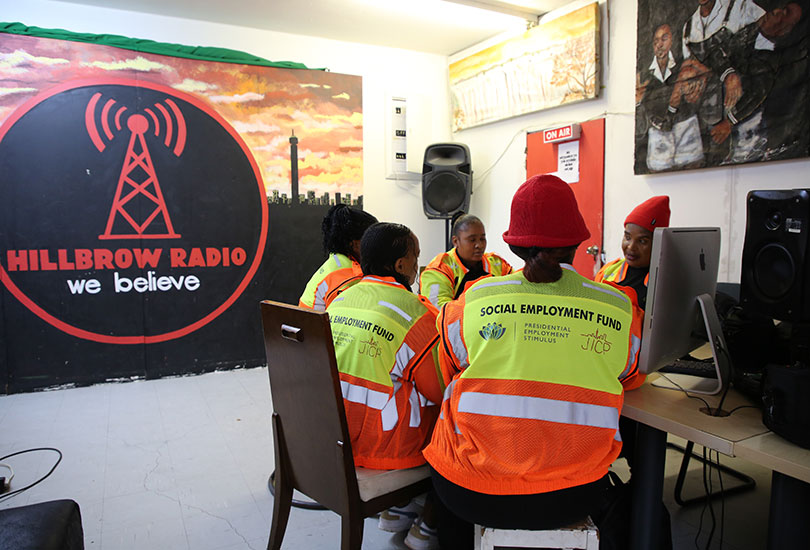
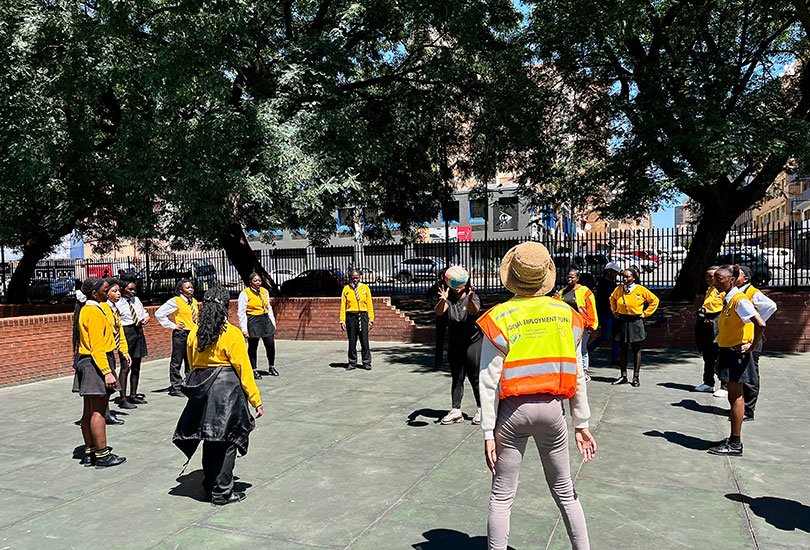
In this context, public employment becomes more than income support. It becomes a stabilising mechanism.
Through the Presidential Employment Stimulus (PES), administered by the Industrial Development Corporation (IDC), funding is channelled via the Social Employment Fund (SEF) to strategic implementation partners such as the JICP. This enables the JICP to deliver structured, place-based employment interventions that support both urban functionality and household resilience.
SEF funding allows JICP to anchor employment across its core focus areas: waste management, public space activation, safety support, food security, early childhood development and community arts. The objective is deliberate: combine immediate income with visible urban improvement and skills development.
According to David van Niekerk, JICP CEO, public employment works best when funding discipline is matched with local implementation capacity. “Public employment keeps cities working and people moving forward,” he points out. “When structured correctly, it stabilises urban systems while creating pathways into formal work, entrepreneurship and further training. The IDC’s professionalism and disciplined stewardship of the PES have made this possible. Their partnership approach ensures that public funds translate into measurable, on-the-ground impact.”
For Bhavanesh, the strength of the collaboration lies in delivery: “The JICP team doesn’t just talk about a better Johannesburg. They roll up their sleeves and make it happen.”
The IDC–JICP partnership demonstrates a key regeneration principle: catalytic public funding, when combined with accountable local implementation, can strengthen urban systems while restoring opportunity at community level.